Last updated 2026-08-18
TL;DR
Arkansas cut and wrap runs on two boards. Get a custom exempt establishment license from the Department of Agriculture, Livestock and Poultry Division, Meat Inspection Program. Process deer, and you add an Arkansas Game and Fish Commission wildlife meat processor permit. No agency publishes a single startup cost, and no law sets a turnaround. Small rooms run tens of thousands. Fall deer often takes two to eight weeks.
Do you need a license for cut and wrap in Arkansas?
Yes. Arkansas requires a custom exempt meat establishment license through the Arkansas Department of Agriculture, Livestock and Poultry Division, Meat Inspection Program [3]. Accept wild deer or other game, and you also need a commercial wildlife meat processor permit from the Arkansas Game and Fish Commission [4]. Two boards. Two forms.
Arkansas Code Title 20, Chapter 57 is the state's meat inspection enabling law [5]. The federal exemption that lets a shop cut and wrap for the owner without full inspection sits in 9 CFR 303.1 [1]. Under that rule the meat cannot be sold or offered for sale. You are running a service business, not a retail meat counter.
The Arkansas paper path is a two-board path from the start. See the separate Arkansas cut and wrap license guide for the exact form sequence.
How much does cut and wrap cost in Arkansas?
No state office publishes one Arkansas cut and wrap startup number. Budget for two annual permit fees, then equipment. A small custom exempt room built with used gear runs $30,000 to $100,000 before your first customer. A new inspected facility is a heavier build, often $500,000 and up [8]. Fee amounts change, so ask each board when you file.
Those equipment ranges are national feasibility numbers, not an Arkansas fee schedule. The state fees themselves stay modest, often in the hundreds per year, but do not run on memory. Call the Meat Inspection Program and the AGFC commercial licensing desk and get the current figure in writing [3][4].
Customer prices are private. No state agency publishes a price list for deer. Walk-up quotes in Arkansas during a recent deer season ran roughly $85 to $150 for a basic deer depending on cuts, but that is word of mouth. Call three shops in your county before you set your own number.
No two states have the same fee shape. Compare cut and wrap cost in Alabama for a nearby state's annual fee structure.
How long does cut and wrap take in Arkansas?
No Arkansas statute or rule sets a processing deadline. The state controls license review and inspection scheduling, not how many weeks a deer hangs in your cooler. In practice, Arkansas custom shops quote two to eight weeks for deer cut and wrap in peak fall, with the longest waits in late November. Ask before you drop off.
For startup licensing, the Meat Inspection Program does not publish a guaranteed turnaround. A complete application usually gets an inspector call within a few weeks, but field schedules and deer season affect it. File before August if you want to open for the November rush [3].
Your own turnaround comes down to labor and freezer space. Most new operators lowball packaging time. A single deer can take one person two to three hours from carcass to labeled packages. That is field reality, not a state standard.
Which agency issues cut and wrap licenses in Arkansas?
The Arkansas Department of Agriculture, Livestock and Poultry Division, Meat Inspection Program handles custom exempt establishment licensing and inspection [3]. Arkansas runs a state inspection program under the USDA Food Safety and Inspection Service, so state enforcement has to meet federal standards [2]. FSIS says state programs must enforce requirements "at least equal to" federal requirements [2].
Start by calling the main office in Little Rock and asking for the Meat Inspection Program. Ask for the custom exempt application packet, the current fee schedule, and a facilities checklist. Some forms live online, but the program is small and the fastest route is a phone call.
Do not send money before you know the inspector assigned to your county. A ten-minute conversation can save you a build-out mistake.
Do I need a separate permit to process deer in Arkansas?
Yes. Deer and other wild game fall under the Arkansas Game and Fish Commission, not the Department of Agriculture alone. AGFC issues commercial wildlife meat processor permits for people who receive, possess, or process game animals for pay [4]. Apply for that before you accept your first deer.
Expect to keep a separate wild game log. AGFC may also require authorization or a permit book for receiving game during deer season. The rules shift year to year, so confirm the current fee and any carcass tag requirement with AGFC before you open [4].
Some small shops process only domestic livestock in winter and add game in the fall. That works, but the deer permit applies the moment a hunter's animal crosses your door. States with heavier remote game pressure follow a similar two-board sequence. See cut and wrap license in Alaska if you handle caribou or moose.
What does custom exempt mean for an Arkansas cut and wrap shop?
Custom exempt means you cut and wrap an animal for the person who owns it, and that package gets labeled "NOT FOR SALE." 9 CFR 303.1 requires the establishment to identify product and keep it out of commerce [1]. You charge a processing fee. You never sell the meat.
That is the whole difference. Want to sell beef sticks, cuts, or venison? Then you leave custom exempt and go state or federally inspected. Arkansas runs a state inspection program, so inspected product can enter retail and wholesale [2]. Starting custom exempt is cheaper and faster, but it caps your business model.
Most Arkansas deer processors stay custom exempt because hunters bring their own animals. The meat never changes hands.
| Feature | Custom exempt | Inspected |
|---|---|---|
| Can sell meat | No | Yes |
| Main Arkansas agency | Department of Agriculture | Department of Agriculture or FSIS |
| Required label | NOT FOR SALE | Mark of inspection |
| HACCP plan | Not required | Required |
Read how to start cut and wrap in Alabama to see how a nearby state handles the same custom exempt path.
What equipment and facility basics does cut and wrap require in Arkansas?
A cut and wrap room needs hot and cold running water, a hand sink separate from the equipment sinks, smooth cleanable walls and floors, real drainage, and enough refrigeration to hold carcasses and finished packages. Federal sanitation performance standards apply through the state program, and the inspector will look at those details [7].
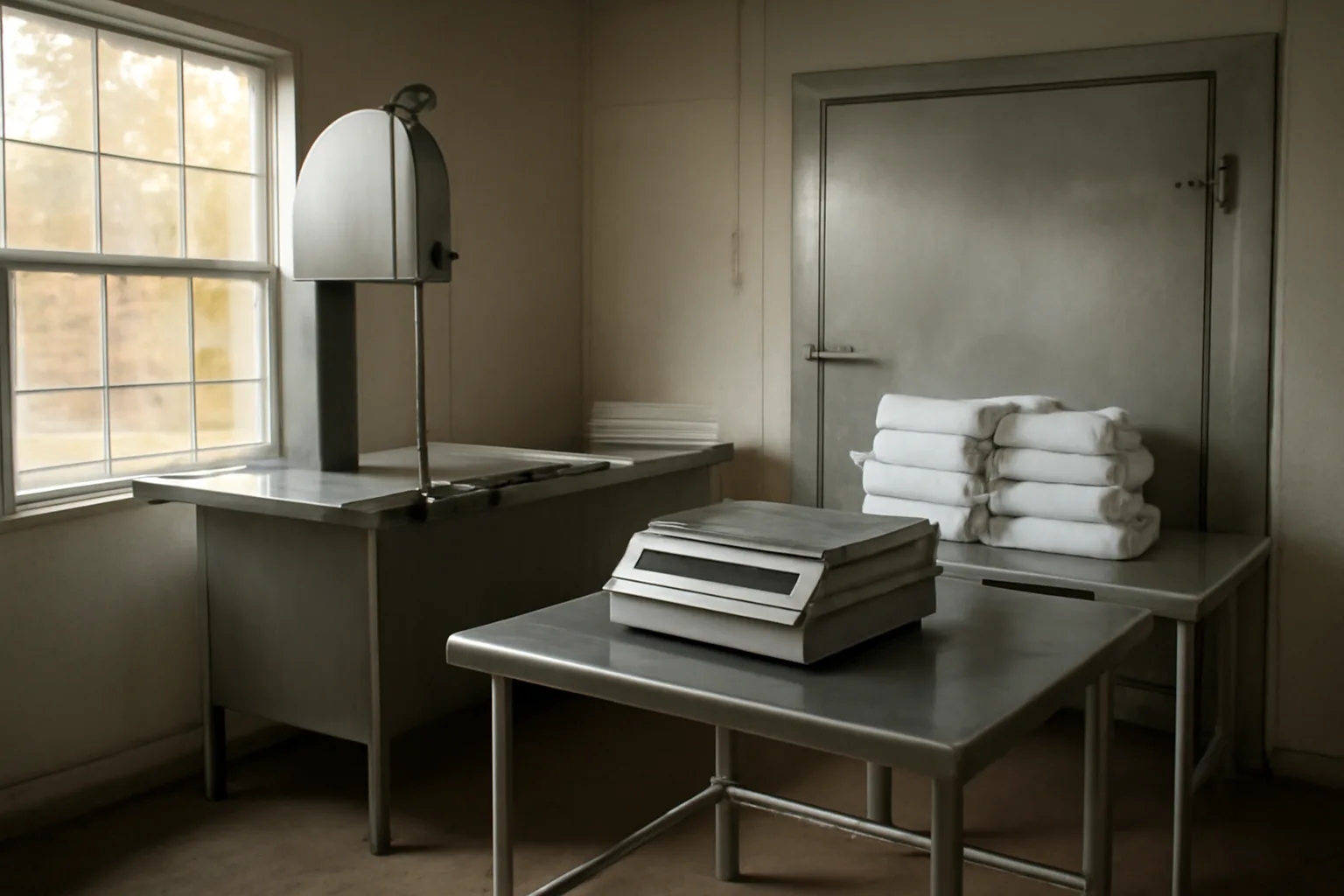
Core equipment is a band saw, grinder, scale, wrapping table, a vacuum sealer or paper wrapping setup, a cooler, a freezer, and stainless or food-grade tables. Used equipment is fine to start, but have a meat equipment service tech check blade guards and wiring before you buy.
Get pre-approval on the room layout before you cut a wall. A small room with bad flow, a door swing that blocks cleanup, or no mop sink can fail an inspection. Ask the Meat Inspection Program for the Arkansas facilities checklist before you sign a lease [3].
What paperwork gets filed first to start cut and wrap in Arkansas?
File the custom exempt establishment application with the Arkansas Department of Agriculture, Meat Inspection Program [3]. If your business accepts deer, file the AGFC commercial wildlife meat processor permit as a separate step [4]. Do both before you open, not after your first deer season.
Then check local zoning, sign permits, and a sales tax account with the Arkansas Department of Finance and Administration if you sell supplies or retail items. The state meat program will want to see the room before you process. You may need a written sanitation standard operating procedure even though full HACCP is not required for custom exempt [7].
CutWrapPath sells a one-time $179 HACCP + Deer-Season Kit at /start. It puts your written logs and season records in one place if you plan to add inspection later. You still file the state forms yourself.
The full paper path looks like this: application, fee, pre-opening inspection, AGFC permit, local building sign-off, then your first labeled package.
What records and labels does a custom exempt shop need in Arkansas?
Label every custom exempt package with the owner's name, species, date, and the words "NOT FOR SALE." 9 CFR 303.1 sets the recordkeeping and labeling burden for custom exempt product [1]. The rule does not require a USDA mark, but it does require enough records to trace each animal.
Keep a log with the hunter or livestock owner, the animal identification, the date received, the cut list, and the date returned. Federal custom exempt records must be kept for two years [1]. Your AGFC wild game log may carry its own retention rule, so keep both.
Sticky notes will sink you. A bound notebook or a simple spreadsheet is fine. The inspector can ask to see it. If you cannot show where a package went, your license is at risk.
How do CWD and carcass movement affect Arkansas cut and wrap?
Arkansas has chronic wasting disease zones, and deer carcass movement restrictions change by zone and season. Check the Arkansas Game and Fish Commission CWD page before you accept deer from a different county or a neighboring state [6]. A cut and wrap shop is exactly where a restricted carcass should not turn up.
Ask the hunter for the harvest county and the confirmation number if that county requires CWD testing. You do not have to enforce game law, but you do need a defensible record. A small sign at the intake window with the current zone list saves arguments.
Process out-of-state deer, and you check both Arkansas and the state of origin. A legally tagged Missouri deer can still be illegal to move into an Arkansas CWD zone under current movement rules [6].
What should I actually do first?
Call the Meat Inspection Program before you buy a single piece of equipment. Ask for the current custom exempt application, the fee schedule, and the inspector assigned to your county. Then walk that inspector through a building you already own or can rent. The phone call costs nothing and prevents a bad lease.
Do not put up a new metal building for a startup until you know your deer season volume. Plenty of Arkansas shops start in a converted farm shop with a used band saw and a double-door cooler. Spend on cleanup and drainage first, not stainless everything.
Price your processing near the local market. If the shop down the road charges $110 for a basic deer, you can go a little higher only if you return packages faster or offer vacuum sealing. Speed is the product.
Can you start custom exempt and add inspection later?
Yes, you can start custom exempt and add state inspection later. The room has to meet a higher standard on flow, lighting, and recordkeeping, and HACCP becomes mandatory once you produce inspected product [2][7]. Building to inspection dimensions from day one is cheaper than moving a wall in year two.
The move from custom exempt to inspected also changes your label. Inspected product carries the mark of inspection and can be sold. Custom exempt product cannot. If you think you might sell venison sticks or beef boxes in two years, tell the inspector on the first visit.
CutWrapPath is an independent publisher, not a law firm and not a service company. The $179 HACCP + Deer-Season Kit at /start is a reference set. Your binding answers come from the Arkansas Department of Agriculture and AGFC.
Frequently asked questions
Do you need a license for cut and wrap in Arkansas?
Yes. A for-pay cut and wrap operation needs a custom exempt establishment license from the Arkansas Department of Agriculture, Livestock and Poultry Division, Meat Inspection Program. If you process wild game, you also need a commercial wildlife meat processor permit from Arkansas Game and Fish Commission. Selling meat requires a separate inspected status.
How much does cut and wrap cost in Arkansas?
For customers, deer cut and wrap prices are not published by the state. Arkansas walk-up quotes have ranged from about $85 to $150 per basic deer, but call local shops. To start, budget for two annual state fees plus equipment. A small custom exempt room using used equipment can run $30,000 to $100,000; a new inspected plant often exceeds $500,000.
How long does cut and wrap take in Arkansas?
There is no state rule that sets a turnaround time. Arkansas shops typically quote two to eight weeks in peak deer season, with the longest waits in late November. For licensing, file well before August; the Meat Inspection Program does not guarantee a set approval window.
What is custom exempt in Arkansas?
Custom exempt means you process an animal for the owner and charge a service fee. The meat cannot be sold. Each package gets "NOT FOR SALE" and the operation follows 9 CFR 303.1 records instead of full inspection. It is the standard Arkansas deer processing path.
Is a wild game processor permit different from a meat processing license?
Yes. The Department of Agriculture meat establishment license covers the room and processing. An Arkansas Game and Fish Commission commercial wildlife meat processor permit covers receiving and processing wild game for pay. You need both for deer.
Can I cut and wrap from a home kitchen in Arkansas?
No. A cut and wrap business is a commercial meat operation. It cannot operate from a residential kitchen or a shared home refrigerator. The room needs separate hand and equipment sinks, cleanable surfaces, and commercial refrigeration; the inspector must approve the space before use.
Does a custom exempt Arkansas shop need HACCP?
Not for pure custom exempt work, but sanitation standard operating procedures apply. If you convert to state or federal inspection, HACCP becomes mandatory. Most new shops keep written logs and a basic plan from the start to make the transition easier.
Can I sell deer summer sausage or sticks from cut and wrap?
Under custom exempt, no. The finished product belongs to the hunter who brought the deer. Selling it, even at a market, requires inspected status. The shop may add pork and seasonings during processing, but the final package cannot be offered for sale.
What records does Arkansas require after opening?
Custom exempt records must identify each animal owner, species, date in, cut list, and date returned, and federal rules require keeping them for two years. AGFC may also require a wild game log. The inspector can check records during any visit.
Do I need a sales tax permit for cut and wrap in Arkansas?
A processing service is not a sale of meat, but many shops sell supplies, jerky, or retail items, which usually requires an Arkansas sales tax permit from the Department of Finance and Administration. Ask your accountant about service fees and local taxes before opening.
What are the building requirements for a cut and wrap room?
You need hot and cold running water, separate hand and equipment sinks, smooth washable surfaces, drainage, and refrigeration. Federal sanitation performance standards apply through the state program. Ask the Meat Inspection Program for the Arkansas facilities checklist before signing a lease.
How do I find a cut and wrap processor in Arkansas?
Call the Meat Inspection Program for a current list of licensed custom exempt shops, or ask local deer check stations and game wardens. Word of mouth from hunters is usually the most current source because shops open, close, and change deer season hours.
Sources
- Cornell Law School Legal Information Institute, 9 CFR § 303.1: Custom exempt processing is for the owner, not for sale, with record and labeling requirements.
- USDA Food Safety and Inspection Service, State Inspection Programs: Arkansas participates in state meat inspection; programs must enforce at least equal to federal requirements.
- Arkansas Department of Agriculture, Livestock and Poultry Division, Meat Inspection Program: The division licenses and inspects custom exempt meat establishments in Arkansas.
- Arkansas Game and Fish Commission, Commercial Licenses: Commercial wildlife meat processor permit required for processing wild game for pay.
- Justia, Arkansas Code Title 20 Chapter 57: Arkansas state meat and poultry inspection enabling law.
- Arkansas Game and Fish Commission, Chronic Wasting Disease: CWD management zones and carcass movement rules apply to deer processors.
- Cornell Law School Legal Information Institute, 9 CFR Part 416: Sanitation standard operating procedures apply to meat processing establishments.
- Niche Meat Processor Assistance Network, Business Planning: Startup budgets range from under $100,000 for small custom rooms to over $1 million for new inspected plants.