Last updated 2026-08-17
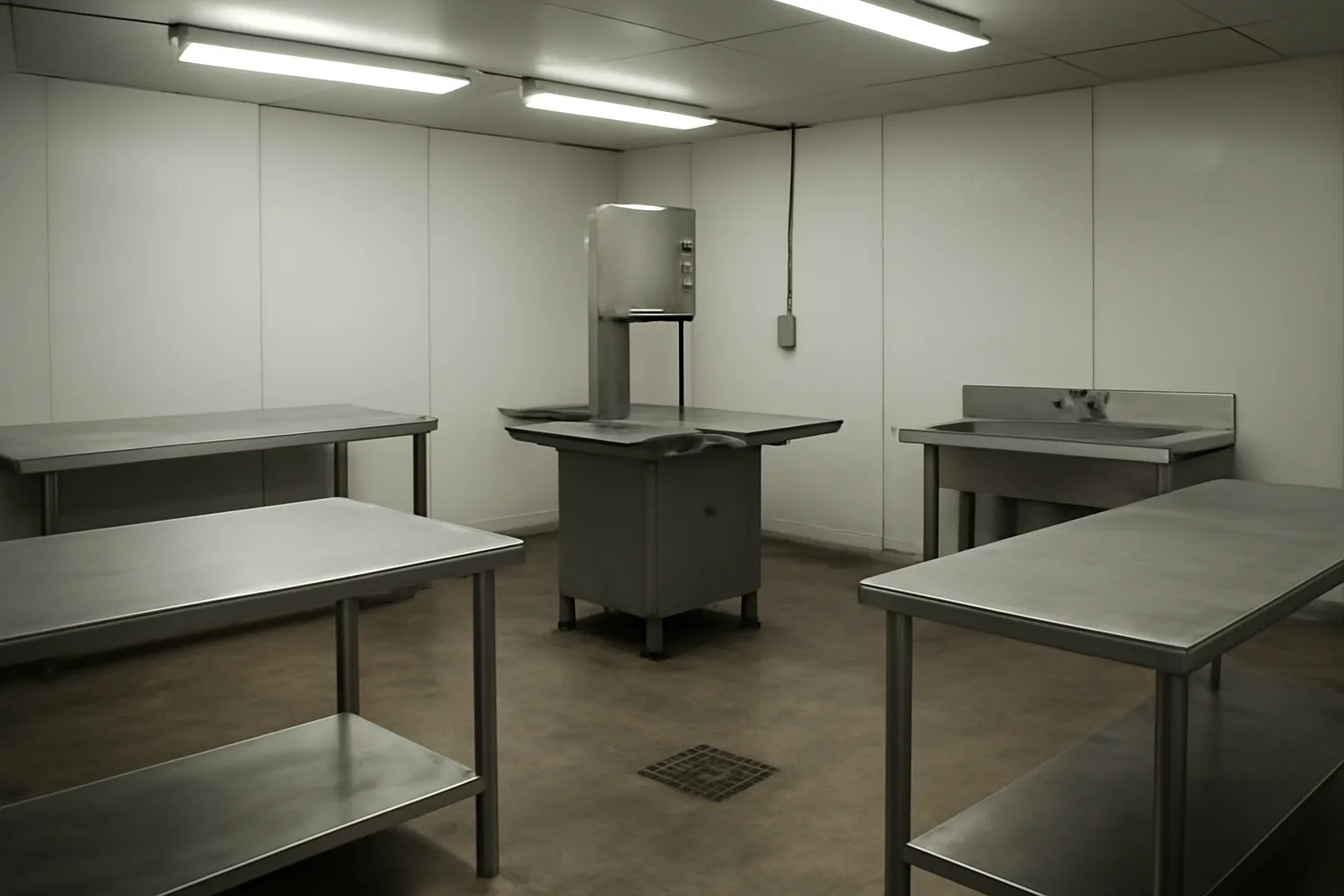
TL;DR
To start cut and wrap in Arizona you need a Meat Establishment license from the Arizona Department of Health Services, a facility built to ADHS construction and equipment standards, and a written HACCP plan on file. Budget $25,000 to $80,000 or more depending on build versus retrofit. Plan eight to sixteen weeks to get licensed. Confirm current fees with ADHS directly.
What is cut and wrap in Arizona, and who regulates it?
Cut and wrap is the business of taking whole or half carcasses from a slaughterhouse, breaking them into retail or customer-specified cuts, sealing them in vacuum bags or butcher paper, and handing the finished packages back to the owner or selling them. You're not slaughtering. There's no kill floor. But you are processing meat in a commercial setting, and Arizona treats that as a licensed activity.
The Arizona Department of Health Services (ADHS) is the main licensing authority for meat establishments that operate outside federal inspection. The agency runs the state meat program under Arizona Revised Statutes Title 3, Chapter 5, the Arizona Meat Inspection Act [1]. If you process only custom-exempt meat, meaning animals the owner brings in for their own household use and marked "Not for Sale," you still fall under state rules for facility construction and sanitation. Sell any part of the product, and inspection requirements get stricter fast.
The Arizona Department of Agriculture and county health departments can add permits depending on where you sit and what you do. A cut and wrap operator near Tucson may face Pima County requirements stacked on the state ones. Start with ADHS. Then call your county environmental health office.
For a closer look at what the license itself covers, read the cut and wrap license in Arizona guide on this site.
Do you need a license for cut and wrap in Arizona?
Yes. Running a meat processing facility in Arizona without a state license is a criminal violation under the Arizona Meat Inspection Act [1]. ADHS issues the credential, commonly called a Meat Establishment license or, for the custom model, a Custom Exempt Meat Establishment registration. The names blur in practice, so when you call ADHS, confirm which one fits your exact setup.
Here's the distinction that matters most for a new operator.
- Custom-exempt only: You process animals the owner brings, the product goes back to that same owner, and nothing gets sold. You register with ADHS and stamp "Not for Sale" on every package. Federal USDA inspection is not required for this model [2].
- Retail or wholesale sales: You sell cuts to the public or to restaurants. That requires a state-inspected establishment for in-state sales, or a federally inspected one if product crosses state lines. Arizona's state inspection runs under a cooperative agreement with USDA FSIS [9].
Most small cut and wrap startups in Arizona run custom-exempt, at least at first. It's simpler. You're not juggling an inspector on a kill floor, because there is no kill floor. You take in carcasses that already passed inspection at a licensed slaughter facility, break them down, and give them back.
One point people get wrong: even custom-exempt facilities have to meet ADHS construction, sanitation, temperature, and equipment standards. The "Not for Sale" label doesn't get you out of the facility rules. It gets you out of per-carcass inspection. Those are two separate things.
What are the facility requirements for an Arizona cut and wrap license?
ADHS requires any licensed meat establishment to meet construction and operating standards set out in the Arizona Meat Inspection Act rules [1]. The list below reflects what ADHS typically asks for. Confirm the current version before you sign a lease or pour a slab.
- Floors: sealed, coved at the wall, sloped and drainable to floor drains. Sealed concrete with an approved coating or quarry tile are the usual picks.
- Walls and ceilings: smooth, non-absorbent, light-colored, cleanable. Standard drywall gets rejected. FRP (fiberglass-reinforced panels) or stainless are common.
- Refrigeration: mechanical cooling that holds product at or below 40 degrees F (4 degrees C) at all times. Walk-in sizing depends on your volume, and ADHS checks that your cooler can handle the capacity you claim.
- Hand-washing: dedicated hands-free sinks separate from product sinks, with soap and single-use towels at the point of use.
- Lighting: enough foot-candles at cutting surfaces. USDA guidance references 50 foot-candles at work surfaces [10].
- Water: potable supply, hot and cold at every sink.
- Pest control: a documented program with sealed entry points.
- Separate areas: storage, cutting, wrapping, and waste handling physically separated or clearly divided.
Retrofitting a commercial space means real construction money. A raw warehouse in Phoenix can work, but you'll spend on drainage, wall panels, cooler install, and electrical before you ever touch a band saw.
HACCP is a separate obligation and just as firm. Arizona follows federal HACCP principles for state-inspected plants, and even custom-exempt operators are better off with a written plan in hand before the inspector arrives.
How much does cut and wrap cost in Arizona?
There's no single number, because the range is wide and it depends on whether you build from scratch, retrofit an existing food space, or take over a running meat shop. Here's an honest breakdown.
| Cost Category | Low End | High End | Notes |
|---|---|---|---|
| ADHS license fee | confirm with ADHS | confirm with ADHS | Fees change; call ADHS before budgeting |
| County/city permits | $200 | $1,500+ | Varies by county and square footage |
| Facility build-out (retrofit) | $15,000 | $60,000+ | Drainage, FRP walls, cooler, electrical |
| Walk-in cooler (new) | $5,000 | $20,000+ | Size-dependent; used units available |
| Band saw | $800 | $4,000 | New; quality used units often $400-1,200 |
| Grinder (if offering ground beef) | $500 | $3,500 | |
| Vacuum sealer | $600 | $5,000 | Chamber sealers at mid-range; tabletop at low end |
| Wrapping table, hand tools | $500 | $2,000 | |
| HACCP plan development | $0 | $2,000 | DIY vs. hired consultant |
| Working capital (first 90 days) | $5,000 | $20,000 | Payroll, supplies, utilities |
A bare-bones retrofit in a rural Arizona county runs around $25,000 to $40,000 all-in. A purpose-built urban shop with refrigerated holding, a freezer room, and all new equipment clears $100,000 without much trouble.
Arizona's climate adds a cost that operators from cooler states miss. Your HVAC and cooler work harder here. A walk-in sized right for Minnesota is undersized in a Phoenix August, because the ambient heat load is higher. Get a sizing calculation from a commercial refrigeration contractor who knows the Southwest, not a catalog spec sheet.
The ADHS license fee is a small slice of your total. Confirm the current amount with ADHS at (602) 364-3150 or through the ADHS licensing portal [3]. Fees are set by statute and shift with the state budget cycle.
If you want a HACCP plan template and a first-year operations checklist built for deer season and custom-exempt work, CutWrapPath's $179 one-time kit at /start covers it without a consultant's bill.
How long does cut and wrap take in Arizona to get licensed and open?
Plan eight to sixteen weeks from "I want to do this" to first carcass on the table, if things go smoothly. That's a real-world range, not a promise, and it assumes you have a space secured before you apply.
Here's how the timeline usually stacks.
- Week 1-2: Secure your location and sign the lease. Confirm zoning allows food processing with the city or county planning department.
- Week 2-4: Submit your facility plan to ADHS for pre-approval review. ADHS wants floor plans, an equipment list, water source documentation, and your proposed HACCP plan before you start major construction. Do this before you build and you save expensive rework.
- Week 3-8: Build-out or retrofit. This is the longest and most variable step. A simple retrofit in a space that already has floor drains and adequate power can take three weeks. Starting from raw concrete in a warehouse runs eight to twelve.
- Week 6-10: Final ADHS inspection. Notify ADHS when construction is done and they schedule an on-site visit. Pass, and you get your license. Have deficiencies, and you fix them and re-inspect. Budget time for at least one correction cycle.
- Week 8-16: License in hand. You open.
Permits don't move in days. The Phoenix metro queue is busy. Maricopa County building permits for commercial food service construction can take three to six weeks just for issuance [4]. Rural counties sometimes move faster.
The thing that delays operators more than anything else: an incomplete application, or starting construction before ADHS reviews the facility plan. Talk to ADHS before you pour concrete.
What HACCP requirements apply to Arizona cut and wrap operators?
HACCP stands for Hazard Analysis and Critical Control Points. It's a systematic way to spot biological, chemical, and physical hazards in a food operation and set controls to prevent them. For federally inspected meat plants, HACCP plans are mandatory under 9 CFR Part 417 [2]. For state-inspected plants in Arizona, the program runs under a cooperative agreement with USDA FSIS and mirrors the federal standard [9].
For custom-exempt operators, the paper requirement is lighter, but ADHS inspectors still ask about your sanitation procedures, temperature controls, and how you keep one customer's animal from touching another's. A written HACCP plan protects you in an inspection and protects your customers on the plate.
At a minimum, a cut and wrap HACCP plan should cover:
- Receiving: temperature of incoming carcasses, documentation, rejection criteria.
- Temperature control: critical limits for holding (at or below 40 degrees F), monitoring frequency, corrective action when a cooler fails.
- Sanitation: cleaning and sanitizing schedules for every contact surface, plus equipment breakdown and reassembly.
- Employee hygiene: hand-washing protocols, illness policies, protective clothing.
- Packaging and labeling: "Not for Sale" labels for custom product, accurate weight and customer ID on each package.
- Pest control: a documented program run by a licensed operator.
Federal rules at 9 CFR 417.2 state that "every official establishment shall conduct, or have conducted for it, a hazard analysis to determine the food safety hazards reasonably likely to occur in the production process" [2]. Custom-exempt facilities aren't "official establishments" under that definition, but the logic still applies and inspectors use it as a yardstick.
Deer season is when Arizona shops get slammed. Elk and mule deer hunters in the White Mountains and on the Kaibab Plateau fill counters from mid-October into December [5]. Open in time for deer season and your HACCP plan needs to be done before the first carcass shows up, not after.
How does Arizona's deer season affect cut and wrap operations?
Arizona Game and Fish runs deer, elk, antelope, and other big game seasons on a controlled permit draw [5]. Deer archery opens in August, rifle seasons run October through December, and late deer hunts stretch into January. Elk rifle seasons cluster in October and November. That gives a cut and wrap operator a four-month window of heavy demand.
For a new operator, that seasonality is both the opportunity and the trap. The opportunity: open in September, run hard through December, and bank enough to carry the slow spring and summer. The trap: open in September while you're still chasing a cooler problem or waiting on a re-inspection, and you miss the best revenue window of the year.
Volumes swing hard by location. A shop near Show Low or Pinetop serving White Mountain elk hunters can handle forty to eighty animals a week at peak. A Phoenix shop serving metro hunters who drew a unit tag might see five to fifteen. Mule deer in the strip country near Fredonia keep operators busy who can reach that remote clientele.
Custom game processing in Arizona generally runs $0.85 to $1.25 per pound of field-dressed weight, or shops charge by the cut package. There's no fixed rate. It's local and competitive. Ask what established shops in your target area charge before you set your own menu.
For how a neighbor handles the same seasonal pressure, the how to start cut and wrap in Colorado guide is worth a read, since Colorado's elk season overlaps and some Arizona hunters process on either side of the line.
What zoning and local permits do you need in Arizona?
The ADHS license is one layer. Your location also has to be zoned for food processing or light industrial use, and you need a business license from your city or town.
Arizona is a home-rule state, so cities and towns hold real authority over zoning and business licensing inside their borders [6]. What's fine on an unincorporated Yavapai County parcel may be banned in a Prescott commercial zone without a conditional use permit. Check zoning before you sign anything.
Permits and licenses you'll likely need beyond ADHS:
- City or town business license: usually $50 to $300 a year.
- County environmental health permit: required in Maricopa, Pima, and most other urban counties for any food handling operation.
- Building permit: required for construction or major renovation. Electrical subpanels for commercial refrigeration almost always trigger one.
- Sign permit: if you're hanging signage visible from the road.
- Wastewater discharge permit: if your floor drains tie into a municipal sewer, the city may want a pretreatment permit for meat processing wastewater. This one is real and often missed.
Meat processing wastewater carries high biological oxygen demand and heavy fats, oils, and grease. Phoenix and Tucson run pretreatment programs through their environmental services departments that can require grease interceptors or surcharge fees for high-strength waste [7]. Rural operators on septic handle it through a system designed and permitted for the load by the county.
The how to start cut and wrap in California guide covers a state with an even heavier local permitting stack if you want to see what complicated really looks like.
What equipment does a basic Arizona cut and wrap shop need?
You can get running on a tight equipment list. More gear means more capability, but also more capital, more maintenance, and more cleaning time. Start with what your expected species and customer mix actually require.
Core equipment for a basic startup:
- Walk-in cooler: non-negotiable. Size it for your peak week. A 10x12 cooler holds roughly fifteen to twenty deer or four to six beef halves comfortably. In Arizona, buy more cooler than you think you need, because the summer and shoulder-season heat loads are brutal.
- Band saw: a floor-model meat band saw handles bone-in work. Entry-level Hobart or Biro saws are workhorses. Blade sharpening gear or a sharpening contract is part of the cost.
- Grinder: if you're offering burger or sausage, you need a commercial grinder. A #22 or #32 head handles small-volume shops fine.
- Vacuum sealer: chamber sealers beat external ones on seal quality and handle liquid product better. For game meat, they're the standard.
- Cutting tables: stainless, on casters for cleaning. Not wood. Not plastic boards on a folding table. ADHS flags anything that isn't commercial-grade and cleanable.
- Hand tools: breaking knife, boning knife, scimitar, steel, cut-resistant gloves, aprons. Budget $300 to $600 for a starting set.
- Scale: a commercial, NTEP-certified scale if you charge by weight. Arizona weights and measures rules apply [8].
- Thermometers: calibrated and documented. You have to log cooler temps. A data logger in your walk-in costs under $100 and beats manual logs for proving temperature control in an inspection.
Used equipment is a legitimate play in Arizona. Restaurant auctions in Phoenix and Tucson move commercial refrigeration and food processing gear all the time. Just have a tech inspect any used refrigeration unit before you rely on it.
How do you handle food safety and liability as an Arizona cut and wrap operator?
A cut and wrap operator sits in a specific legal spot. You're either handling someone else's animal (custom-exempt) or selling meat to the public (retail or wholesale). Your exposure differs between those two, but neither is zero.
For custom-exempt work, product going back to the owner doesn't carry the same implied warranties as a retail sale. That doesn't make you bulletproof. If someone gets sick and traces it to mishandling at your facility, you can still face a claim. Bad temperature control, cross-contamination between customers' animals, and mislabeled packages are all real liability vectors.
For retail, standard product liability rules apply under Arizona law. A customer who buys ground beef from your counter and gets sick from E. coli O157:H7 can sue. Your defense is your documented HACCP plan, your temperature logs, your sanitation records, and your testing program if you run one.
Commercial general liability (CGL) insurance is not required to get your ADHS license, but any sensible operator carries it. A food-specific CGL policy with product liability coverage is what you want. A small custom-exempt shop might pay $1,500 to $3,500 a year. Get at least three quotes from brokers who write food processing accounts.
Documentation habits that protect you:
- Daily cooler temperature logs, signed and dated.
- Incoming carcass logs: date, customer name, species, number, condition at receipt.
- Outgoing package logs: date, customer name, cuts, weight, lot or batch number.
- Cleaning and sanitation logs.
- Calibration records for your scale and thermometers.
Those logs are your proof that you did things right. They're also the first thing an ADHS inspector reaches for.
For how a neighboring state layers its liability rules, the how to start cut and wrap in Colorado guide covers similar ground.
What are the ongoing compliance requirements after you open?
Getting licensed is the start, not the finish. ADHS runs unannounced inspections of licensed meat establishments. Frequency depends on your facility type, compliance history, and ADHS staffing, but expect one to two inspections a year for a small custom-exempt shop [1].
Your annual license renewal is due before the expiration date printed on your current license. ADHS notifies you, but track the date yourself. Operating on an expired license is a violation.
Other ongoing obligations:
- Temperature monitoring: daily logs, every day you operate.
- Sanitation: a documented cleaning schedule for every food-contact surface. ADHS uses a standardized inspection form, and knowing what's on it is half the battle.
- Employee training: anyone cutting or handling product should have documented food safety training. ServSafe or equivalent is widely accepted and runs under $200 per employee for the course and exam.
- Water testing: on a private well, ADHS may require periodic potability testing. A municipal connection needs proof of potable supply.
- Pest control: documented service records from a licensed operator.
- HACCP plan review: update the plan when you add species, add services, or change your process flow. A plan that no longer matches your actual operation is a deficiency.
If you also process wildlife, Arizona Game and Fish has tagging and record-keeping rules for certain species that run alongside your ADHS obligations [5]. Keep your Game and Fish paperwork separate and organized.
For a checklist that pulls HACCP, temp logs, sanitation schedules, and first-year tasks into one document, the CutWrapPath HACCP + Deer-Season Kit is built for exactly this.
Frequently asked questions
Do you need a license for cut and wrap in Arizona?
Yes. Arizona requires a Meat Establishment license from the Arizona Department of Health Services under the Arizona Meat Inspection Act (ARS Title 3, Chapter 5). Custom-exempt operators who process animals for the owner's household use and label all product "Not for Sale" register through ADHS rather than full inspection, but they still need state authorization and must meet facility standards.
How much does cut and wrap cost in Arizona to start up?
Expect $25,000 to $80,000 for a realistic retrofit startup, depending on the condition of your space and your equipment choices. The largest costs are facility build-out (floor drainage, FRP walls, cooler install) and the walk-in cooler itself. ADHS license fees are relatively small; confirm the current amount with ADHS directly because fees change with the state budget.
How long does cut and wrap take in Arizona to get licensed?
Eight to sixteen weeks from space secured to license in hand is realistic. The biggest variables are local building permit timelines (Maricopa County commercial permits can take three to six weeks alone) and whether ADHS requires a re-inspection after deficiency corrections. Submit your facility plan to ADHS for pre-approval before you start construction to avoid expensive rework.
Does Arizona require HACCP for cut and wrap?
For state-inspected retail or wholesale plants, yes. HACCP is required under Arizona's cooperative agreement with USDA FSIS, which mirrors 9 CFR Part 417. Custom-exempt operators are not subject to mandatory federal HACCP rules, but ADHS inspectors review sanitation and temperature procedures. A written HACCP plan is strongly advisable for any cut and wrap operator regardless of category.
Can you run a cut and wrap shop from a farm or rural property in Arizona?
Possibly, but you still need ADHS licensing and the facility must meet all construction and equipment standards regardless of location. You also need to confirm your county or town zoning allows commercial food processing on agricultural land. Some unincorporated parcels allow it outright; others require a conditional use permit. Check with your county planning department before investing in build-out.
What species can an Arizona cut and wrap shop process?
Under the custom-exempt model, Arizona operators typically process domestically raised beef, pork, and lamb, plus wild game like deer, elk, antelope, and javelina brought in by the hunter. Processing wild game for the hunter's own use is custom-exempt. You cannot sell wild game meat to the public under federal law; that's a firm line. Farmed exotic species may carry additional requirements.
What zoning do I need for a cut and wrap shop in Arizona?
You need a zone that permits commercial food processing or light industrial use. Zoning rules are set by cities, towns, and counties independently. Common compatible zones include B-2 (general commercial), I-1 (light industrial), and some agricultural zones with conditional use permits. Always verify with your local planning department before signing a lease. Operating in a residential zone is not permitted.
Do I need a county health permit on top of the ADHS license?
In most Arizona urban counties, yes. Maricopa and Pima County environmental health departments require their own food establishment permits for commercial food processing. Rural counties vary. Your county environmental health office is the right first call after you've confirmed ADHS requirements. Budget an additional $200 to $1,500 for county permits and expect a county inspection separate from ADHS.
How does Arizona's wastewater rule affect cut and wrap shops?
Meat processing produces high-strength wastewater with elevated fats, oils, grease, and biological oxygen demand. Phoenix, Tucson, and other cities with pretreatment programs may require a grease interceptor, a pretreatment permit, or both before you connect to the municipal sewer. Rural operators on septic need a county-permitted system designed for commercial food processing loads. Address this before you finalize your facility design.
What insurance does an Arizona cut and wrap operator need?
Commercial general liability insurance with product liability coverage is the baseline. It's not required for ADHS licensing, but any landlord will demand it and it's basic prudence for a food business. A small custom-exempt shop typically pays $1,500 to $3,500 a year for a food-appropriate CGL policy. Get quotes from brokers who specifically write food processing or meat accounts, not generic small-business insurers.
When is deer and elk season in Arizona, and how does it affect business?
Arizona Game and Fish runs deer archery season from August, with rifle deer seasons October through December and elk rifle seasons clustered in October and November. That four-month window is the peak revenue period for most Arizona cut and wrap shops. To capture deer season, you need your license and facility fully operational by early October, which means starting the licensing process by June or July at the latest.
Can a cut and wrap shop also sell retail cuts in Arizona?
Yes, but it requires a higher level of licensing than custom-exempt. To sell meat to the public, you need Arizona state-inspected status for in-state sales or federal USDA inspection for interstate commerce. Arizona state inspection operates under a cooperative agreement with USDA FSIS. The facility, record-keeping, and labeling requirements are much more demanding than a custom-exempt registration.
How do I find the ADHS meat inspection program contact in Arizona?
The Arizona Department of Health Services Environmental Services division handles meat establishment licensing. Reach ADHS at (602) 364-3150 or through the ADHS website at azdhs.gov. For pre-application questions, call before submitting anything in writing. Confirm current fees, current application forms, and current inspection scheduling timelines directly with the office, because these details change.
What are the biggest mistakes first-year Arizona cut and wrap operators make?
The most common and expensive mistake is starting construction before submitting facility plans to ADHS for pre-approval. Second is underestimating refrigeration capacity for Arizona's heat load. Third is missing the deer season window because licensing ran long. Fourth is skipping a written HACCP plan and then scrambling during an inspection. All four are avoidable with about six months of lead time and one call to ADHS before you sign a lease.
Sources
- Arizona State Legislature, ARS Title 3 Chapter 5 (Arizona Meat Inspection Act): ADHS is the primary licensing authority for meat establishments under the Arizona Meat Inspection Act; operating without a license is a violation.
- USDA FSIS, 9 CFR Part 417 (HACCP Systems) and custom-exempt provisions: HACCP plans are mandatory for federally inspected meat plants under 9 CFR Part 417; custom-exempt establishments are exempt from per-carcass federal inspection but not from state facility requirements.
- Arizona Department of Health Services, Licensing Services: ADHS issues Meat Establishment licenses and conducts facility inspections under state authority.
- Arizona Game and Fish Department, Big Game Seasons and Rules: Arizona deer archery seasons open in August, rifle deer seasons run October through December, and elk rifle seasons are concentrated in October and November.
- Arizona State Legislature, ARS Title 9 (Cities and Towns), Home Rule Authority: Arizona cities and towns have home-rule authority over zoning and local business licensing within their boundaries.
- Arizona Department of Agriculture, Weights and Measures Services: Commercial scales used for retail transactions in Arizona must be NTEP-certified and are subject to Arizona weights and measures inspection.
- USDA FSIS, State Meat and Poultry Inspection Programs: Arizona operates a state meat inspection program under a cooperative agreement with USDA FSIS, which mirrors federal standards for state-inspected establishments.
- USDA FSIS, Guidance for Beef Slaughter HACCP Systems (lighting standards reference): USDA guidance references 50 foot-candles as the adequate lighting standard at meat processing work surfaces.