Last updated 2026-08-17
TL;DR
Alaska custom-exempt cut and wrap shops process meat for hunters and livestock owners but never sell it retail. They run under the Alaska Department of Environmental Conservation and need a DEC food establishment permit. Costs vary by shop and animal. Processing runs 3 to 21 days depending on season and backlog. Confirm current fees with DEC before you apply.
What is a cut and wrap operation in Alaska?
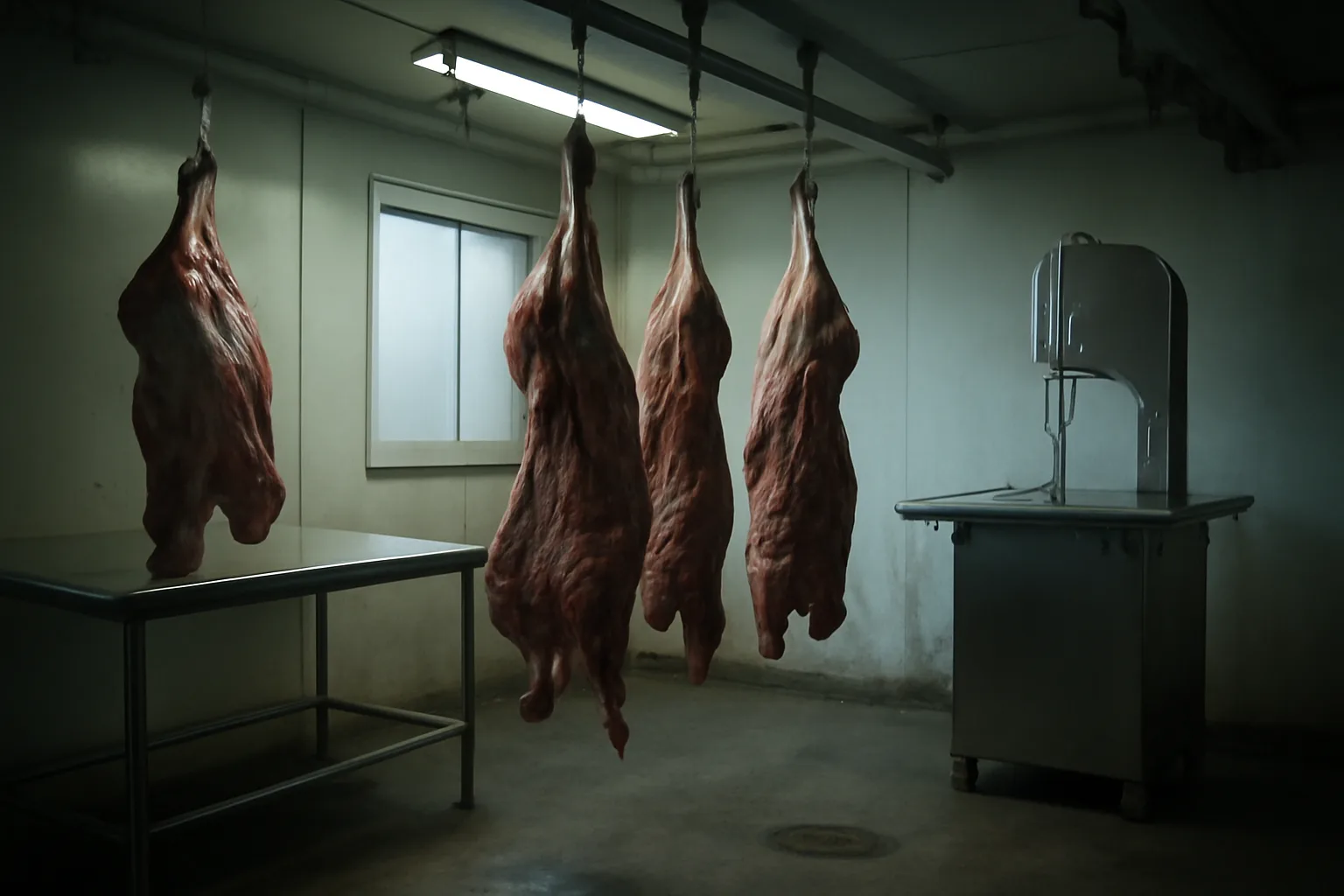
A cut and wrap shop takes carcasses, breaks them into cuts, and wraps them for the owner's freezer. In Alaska that almost always means moose, caribou, deer, or black bear brought in by hunters, plus livestock from small farms and homesteads. The shop never sells the finished product to the public. That single line separates custom-exempt processing from full USDA-inspected operations.
Alaska's geography makes this a real puzzle. A moose can weigh 800 to 1,400 pounds on the hoof [1], and moving that carcass from the field to a processor in Fairbanks or Anchorage often means a bush plane, a boat, or a snow machine. Shops near popular hunting units fill their calendars fast in September and October. If you plan to open a facility, the seasonal crunch matters more than almost any regulatory line item.
Cut and wrap shops are not the same as USDA-inspected slaughter plants. Want to sell the finished cuts to a restaurant or grocery store? You need federal inspection. Custom-exempt work is strictly for the animal owner, and Alaska DEC enforces that boundary.
Do you need a license for cut and wrap in Alaska?
Yes. Alaska requires a food establishment permit from the Division of Environmental Health, under the Alaska Department of Environmental Conservation. The authority is Alaska Statute 17.20 (the Alaska Food, Drug, and Cosmetic Act) and the regulations in 18 AAC 31, which cover food safety at processing facilities [2][3].
The permit covers the physical facility: building layout, water supply, waste handling, temperature control, and sanitation. DEC inspectors review your facility before issuing the permit and come back for follow-up inspections. There is no state-level USDA grant of inspection for custom-exempt work in Alaska. The DEC food establishment permit is what authorizes you to operate.
Alaska does not have a separate "custom exempt" license category matching the USDA language exactly, but DEC's food establishment framework covers shops processing meat for the animal's owner. Process any meat for commercial sale and you step into a different lane, which means contacting the USDA Food Safety and Inspection Service (FSIS) directly [4]. The custom-exempt exemption under 9 CFR 303.1 applies only when the product stays with the owner and is never sold [4].
For hunters, Alaska Department of Fish and Game rules require that game meat be salvaged and used, not wasted, but ADF&G does not license the processing facility. That falls to DEC [5]. So you deal with at least two agencies from day one.
How much does cut and wrap cost in Alaska?
Two separate money conversations run here: what the facility owner pays to operate, and what a hunter or livestock owner pays a shop for processing.
For the facility owner, DEC publishes the food establishment permit fee schedule, but it changes periodically. Food establishment permit fees in Alaska are tiered by facility type and risk category. Confirm the exact current fee with DEC before you budget, because the agency updates its schedule and those numbers move. A reasonable planning range, based on comparable state permit structures, is a few hundred dollars a year for a small facility, but do not treat that as a fixed number. Go straight to DEC's Environmental Health permitting pages [2].
Equipment and renovation is the bigger line. A working cut and wrap space needs a walk-in cooler, food-grade tables, band saws, vacuum packaging gear, and enough water and drain infrastructure to pass inspection. Real build-out costs for a small Alaska facility run $30,000 to $150,000 or more, depending on whether you start from an existing building or build new. Remote locations add a freight multiplier that can double equipment costs.
For hunters paying a shop, rates vary widely. A rough market range, based on industry norms, is $0.50 to $1.25 per pound of hanging weight for basic cut, wrap, and freeze, with extra charges for specialty cuts, deboning, or sausage. Moose processing, given the size, often runs $400 to $900 per animal at shops that will take them at all. Some shops charge flat rates, others by the pound. Call ahead and get it in writing. Nobody keeps a centralized published database of Alaska shop pricing. These numbers come from talking with processors in the region and should be read as a directional range, not a quote.
| Cost category | Rough range | Notes |
|---|---|---|
| DEC food establishment permit (annual) | Confirm with DEC | Fee schedule updated periodically |
| Small facility build-out | $30,000 to $150,000+ | Remote locations cost more |
| Equipment freight to rural AK | 30% to 100% premium | Depends on mode and community |
| Hunter moose processing (market rate) | $400 to $900 per animal | Varies by shop and cut list |
| Hunter caribou/deer processing | $150 to $450 per animal | Smaller carcass, lower base fee |
How long does cut and wrap take in Alaska?
Turn times depend almost entirely on the season and the shop's backlog. Outside hunting season, a small processor with light volume might return a carcass in three to five business days. During the September and October moose and caribou push in Southcentral and Interior Alaska, waits of 10 to 21 days are common at busy shops.
The cold chain complicates things. A carcass needs to stay at or below 40 degrees Fahrenheit during aging and processing [6]. Alaska's weather helps in fall, but temperature swings in early September burn hunters who field-dress an animal in warm conditions and then spend time getting it to a road. By the time the carcass reaches a processor, aging time may already be short, which changes how long the shop can hold it before cutting.
On the permitting side, DEC approval is not quick. Plan for 30 to 90 days from application to approved permit for a new facility, and add time if your facility needs a plan review or structural changes based on the inspection. Alaska DEC does not publish a guaranteed review timeline. This range is based on how similar state food establishment programs run. Confirm with your local DEC Environmental Health district office.
What does Alaska DEC actually require for a cut and wrap facility?
Alaska's food establishment regulations under 18 AAC 31 set the baseline for physical facility requirements [3]. The main categories:
Temperature control: carcass storage must hold product at 40 degrees Fahrenheit or below. Walk-in coolers are expected. In rural Alaska, where power is unreliable, that means either a heavy backup generator or an alternative cold storage plan DEC will scrutinize.
Water supply: potable water from an approved source. This is a real challenge in many rural communities where municipal water is unavailable. You may need to prove your well or hauled-water source meets drinking water standards under 18 AAC 80 [7].
Waste disposal: blood, trim, and offal need a disposal plan that meets local ordinance and DEC requirements. In town that means municipal sewer. In remote areas it can mean approved composting, rendering pickup, or other DEC-approved methods. Check with your borough and DEC before you design the building.
Sanitation: surfaces that touch meat must be cleanable and non-absorbent. Wood cutting boards generally do not pass under modern food safety rules. HDPE or NSF-rated synthetic boards are the standard.
HACCP: Alaska DEC may require or strongly encourage a Hazard Analysis and Critical Control Points plan, especially if you process multiple species or handle wild game from unknown sources. A written HACCP plan documents the biological, chemical, and physical hazards in your process and the controls you use. The USDA has published a HACCP guideline for very small meat and poultry plants that applies directly to shops like these [6]. Building your first HACCP plan and want a structured starting point? CutWrapPath sells a $179 HACCP + Deer-Season Kit at /start that covers the documentation a small custom-exempt shop typically needs.
Labeling: meat returned to the owner must carry the owner's name and be marked "Not for Sale." That is a federal custom-exempt requirement under 9 CFR 303.1 that Alaska facilities must also follow [4].
Does Alaska have a meat processing board or separate licensing body?
No. Alaska does not have a dedicated meat processing board separate from DEC. The Division of Environmental Health within DEC is the primary regulator for food establishments, including cut and wrap shops [2]. There is no Alaska Meat Processing Board of the kind some states run, with a multi-member panel holding separate licensing authority.
For wild game, Alaska Department of Fish and Game sets the rules on salvage and legal possession, but ADF&G does not license processors [5]. For domesticated animals slaughtered and processed for commercial sale, USDA FSIS has jurisdiction [4]. The practical result: a custom-exempt cut and wrap shop in Alaska reports mainly to DEC, with ADF&G as a background regulatory presence on game questions.
This is simpler than some states, but it does not mean one license and you are done. The food establishment permit is ongoing, with annual renewal and periodic inspections.
What are the USDA custom-exempt rules that apply in Alaska?
Federal regulations under 9 CFR Part 303 set the custom-exempt exemption from mandatory USDA inspection [4]. The exemption lets a facility slaughter or process animals without a federal grant of inspection, as long as the product goes back only to the owner and is never sold. USDA FSIS guidance states that custom operations "are exempt from continuous inspection" but must still meet sanitation and labeling requirements [10].
In Alaska that means you can process a hunter's moose and return it to that hunter without USDA inspection. You cannot take any portion of that moose and sell it. Not to a restaurant. Not to the hunter's neighbor. Not online. The moment product leaves the "returned to owner" track, you need inspection.
One wrinkle specific to Alaska: wild game is inherently uninspected. USDA inspection applies to domestic livestock (cattle, pigs, sheep, goats, and a few others). Moose, caribou, black bear, and deer are not amenable species under federal law, so there is no mechanism for USDA inspection of those animals no matter what you want to do commercially. Some states run programs to fill that gap. Alaska keeps wild game processing squarely under state DEC authority.
How does Alaska wild game processing compare to other states?
Alaska is unusual in the volume and variety of wild game moving through cut and wrap shops. Most states handle deer and maybe elk. Alaska adds moose (much larger than any whitetail), caribou, black bear, brown bear, bison from state hunts, and Sitka black-tailed deer in Southeast. The size of moose forces equipment dimensioned for it: a standard deer gambrel and hoist does not work for a 600-pound moose hindquarter.
Regulatory structure in Alaska is simpler than states with multi-board licensing systems. Compare that to California, which layers county environmental health requirements on top of state oversight and runs a separate CDFA meat inspection program for custom-exempt facilities. See our overview of the cut and wrap board in California for a direct comparison.
For states where hunting-focused cut and wrap is the core business, Idaho and Colorado use similar single-agency permitting with strong custom-exempt traditions. Cut and wrap board in Idaho and cut and wrap board in Colorado walk through those frameworks.
On cost of entry, Alaska is genuinely more expensive than most states. Equipment freight, fuel, and the cost of building in remote locations create capital requirements you would not see in the lower 48. A facility that costs $60,000 to build in rural Idaho might cost $120,000 or more in Interior Alaska once you pay for barge freight or air cargo.
| State | Primary regulator | Custom-exempt authority | Wild game volume |
|---|---|---|---|
| Alaska | DEC Division of Environmental Health | State (DEC) + federal (9 CFR 303) | Very high (moose, caribou, bear) |
| Idaho | ISDA Division of Animal Industries | State + federal (9 CFR 303) | High (elk, deer, bear) |
| Colorado | CDPHE | State + federal (9 CFR 303) | High (elk, deer) |
| California | CDFA Meat and Poultry Inspection | State CDFA + federal | Moderate (deer) |
What equipment does an Alaska cut and wrap shop actually need?
The minimum list for a working Alaska operation runs past what the lower 48 needs, because of the species mix and remote infrastructure.
Refrigeration: at least one walk-in cooler big enough to hang multiple moose carcasses, which means 10-foot ceiling clearance and enough rail capacity. Budget coolers built for beef quarters often top out at 7-foot ceilings. A moose split in half still needs 9 feet of hanging clearance. Generator backup is mandatory anywhere power reliability is questionable.
Cutting equipment: a commercial band saw rated for heavy bones (moose femur and humerus are substantial), a full set of breaking knives, boning knives, and steel. Sanitary cutting surfaces meeting NSF standards.
Packaging: a commercial vacuum sealer. In Alaska the default expectation is vacuum-sealed and frozen product, because hunters often travel far to retrieve their meat and need it to last. A chamber vacuum sealer handles bone-in cuts better than an external clamp-style sealer.
Hoisting: a motorized hoist or block-and-tackle rated for at least 800 pounds for moose work. A manual gambrel hoist is undersized here.
Water and sanitation: a three-compartment sink, a handwashing station separate from the processing sink, and a floor drain system that handles blood and wash water. Floor slope toward drains is an inspection item.
See also cut and wrap board in Idaho for equipment standards in a similar northern-state wild game environment.
How do you find a cut and wrap facility in Alaska, or get listed as one?
Alaska Department of Fish and Game keeps a list of game meat processors and taxidermists as a hunter resource, updated periodically [5]. This is the directory hunters reach for when they need a licensed shop near their hunting area. Being listed there is real marketing for any licensed shop.
DEC's environmental health offices hold records of permitted food establishments but do not publish a consumer-facing directory the same way. To verify a specific facility holds a current DEC permit, contact the relevant DEC district office directly.
For new facilities, the sequence goes: DEC permitting, then getting on ADF&G's processor list, then registering with whatever local borough or municipality requires a business license. The borough business license step is separate from the DEC food establishment permit and easy to miss.
Opening a new shop and want to understand HACCP documentation before your first DEC inspection? The HACCP + Deer-Season Kit at /start from CutWrapPath covers the written plan structure small custom-exempt shops typically need. It is a starting point for the paperwork, not a substitute for DEC's own guidance.
What are the biggest compliance mistakes Alaska cut and wrap facilities make?
The most common problem is temperature log gaps. DEC inspectors look for written records showing your cooler held 40 degrees Fahrenheit or below throughout storage. Shops that eyeball the dial and never write it down fail this every time.
Second is the "not for sale" labeling gap. Some shops return product without the required label, or return it to someone other than the registered owner. That is a federal violation under 9 CFR 303.1 even when the sale is informal or the product is wild game [4].
Third is water source documentation. Rural facilities sometimes have potable water from an acceptable source but no current test results on file. DEC expects regular bacteriological testing of your water supply [7].
Fourth is the bear fat problem. Black and brown bear fat renders differently than ungulate fat, and some processors do not clean equipment fully between species, which creates cross-contamination. Bear also carries trichinella risk, a biological hazard that should show up in your HACCP plan if you process bear [6].
Fifth is the moose waste issue. Alaska Statute 16.30.010 creates an affirmative duty to salvage edible portions of game animals [8]. A processor who accepts a carcass and throws out significant edible material without documenting why creates legal exposure for both the processor and the hunter.
Frequently asked questions
Do you need a license for cut and wrap in Alaska?
Yes. You need a food establishment permit from Alaska DEC's Division of Environmental Health to run a cut and wrap facility. There is no separate "meat processing license" in Alaska; the DEC food establishment permit is the primary authorization. Federal custom-exempt rules under 9 CFR 303.1 also apply if you process any domestic livestock species. Contact DEC's environmental health district office for current application requirements.
How much does cut and wrap cost in Alaska?
For hunters using a shop, expect roughly $400 to $900 for moose processing and $150 to $450 for caribou or deer, depending on cut list and location. For opening a facility, build-out runs $30,000 to $150,000 or more; remote locations add heavy freight costs. DEC permit fees vary by facility type. Confirm the current fee schedule with DEC before budgeting; fees change periodically.
How long does cut and wrap take in Alaska?
Outside hunting season, most shops return product in three to five business days. During the September and October moose and caribou season, waits of 10 to 21 days are common at busy facilities. Cold chain logistics, carcass condition on arrival, and cut list complexity all affect the timeline. Call ahead and ask the shop's current queue. For new facility permits, plan 30 to 90 days for DEC review.
Can you process and sell wild game meat in Alaska?
No, not under the custom-exempt framework. Wild game like moose, caribou, and deer processed under Alaska DEC's food establishment permit must be returned to the owner and marked "Not for Sale." USDA inspection does not apply to wild game species, and there is no Alaska state inspection program that makes wild game saleable commercially. Any commercial sale of processed wild game in Alaska is illegal.
Does Alaska require a HACCP plan for cut and wrap facilities?
Alaska DEC may require or strongly encourage a written HACCP plan as part of food establishment permitting, especially for facilities processing multiple species or wild game. A HACCP plan documents biological, chemical, and physical hazards and the controls for each. The USDA has published HACCP guidelines for very small meat plants that apply directly to custom-exempt shops. Ask your DEC district office whether a written plan is required for your facility type.
Who regulates cut and wrap facilities in Alaska?
The Alaska Department of Environmental Conservation (DEC), Division of Environmental Health, is the primary regulator for food establishments including cut and wrap shops. Alaska Department of Fish and Game regulates game animal salvage and possession but does not license processors. USDA FSIS has jurisdiction if you process amenable species (cattle, swine, sheep, goats) for commercial sale, which requires a federal grant of inspection separate from the DEC permit.
What is the difference between custom-exempt and USDA-inspected processing in Alaska?
Custom-exempt processing returns finished product to the owner only and does not require USDA inspection, under 9 CFR Part 303. USDA-inspected processing lets the finished product be sold commercially and requires a federal grant of inspection with ongoing FSIS oversight. Wild game species like moose and caribou are not amenable to USDA inspection regardless of intent. If you want to sell processed meat, you need USDA inspection; wild game cannot legally fill that role.
Does Alaska have a list of licensed cut and wrap facilities?
Alaska Department of Fish and Game keeps a game meat processor directory that hunters use to find licensed facilities near hunting areas. It is updated periodically and is the most practical resource for hunters. DEC holds records of permitted food establishments but does not publish a public consumer directory. Contact your DEC district office to verify a specific facility holds a current food establishment permit.
Can a cut and wrap facility in Alaska also process bear?
Yes, but bear processing carries a specific biological hazard: trichinella, a parasitic roundworm present in bear fat and muscle. Any facility processing bear should include trichinella as an identified hazard in its HACCP plan with appropriate controls. This is true for black bear and brown bear. Proper equipment cleaning between species is also a DEC inspection item. Some facilities decline to process bear; that is a business decision, not a regulatory requirement.
What labeling is required on meat returned from an Alaska cut and wrap shop?
Each package must carry the animal owner's name and be marked "Not for Sale." This is a federal requirement under 9 CFR 303.1 that applies to all custom-exempt facilities regardless of state. Alaska DEC may have additional labeling requirements; confirm with DEC when you apply for your permit. Failure to label properly is one of the most common compliance violations found during inspections.
What water supply requirements apply to Alaska cut and wrap facilities?
Potable water from an approved source is required under 18 AAC 31. In rural Alaska, well water or hauled water systems must meet drinking water standards under 18 AAC 80 and typically require annual bacteriological testing with results on file. Municipal water connections satisfy the requirement automatically. If you plan a facility in a rural location without municipal water, work out your water source plan before submitting your DEC permit application.
How does Alaska's cut and wrap permitting compare to Idaho or Colorado?
All three states use a single-agency food establishment permit model without a separate meat processing board. Alaska DEC, Idaho ISDA, and Colorado CDPHE each act as the state regulatory authority for custom-exempt facilities. Alaska's costs are higher due to freight, remote construction, and the size requirements for moose processing equipment. Regulatory complexity is roughly similar across the three states. See our overviews of cut and wrap in Idaho and Colorado for state-specific details.
What happens if a cut and wrap facility in Alaska fails a DEC inspection?
DEC can issue a corrective action notice requiring deficiencies to be fixed within a set timeframe. Repeated or serious violations can bring permit suspension or revocation. Selling product produced under custom-exempt status is a separate violation that can trigger both state and federal enforcement. Most first-time inspection failures involve correctable issues like missing temperature logs, inadequate labeling, or water system documentation gaps.
Does Alaska have a wanton waste law that affects cut and wrap shops?
Yes. Alaska Statute 16.30.010 requires that edible portions of legally taken game animals be salvaged for human use. A cut and wrap shop that discards significant quantities of edible meat without documentation could expose both the shop and the hunter to legal risk. Processors should document why any edible material is condemned or discarded, particularly if the meat arrived in poor condition. Good intake paperwork protects the shop.
Sources
- Alaska Department of Fish and Game, Moose Species Profile: Moose in Alaska can weigh 800 to 1,400 pounds on the hoof
- Alaska DEC, Division of Environmental Health, Food Safety and Sanitation Program: Alaska DEC Division of Environmental Health issues food establishment permits and oversees food safety at processing facilities
- Alaska Administrative Code, Title 18 (Environmental Conservation): 18 AAC 31 sets the regulatory requirements for food establishments in Alaska including cut and wrap facilities
- USDA FSIS, 9 CFR Part 303, Exemptions: 9 CFR 303.1 establishes the custom-exempt exemption from mandatory USDA inspection, requiring product to be returned to the owner and labeled Not for Sale
- Alaska Department of Fish and Game, Hunting: Alaska ADF&G maintains a game meat processor directory and sets salvage requirements for game animals but does not license processing facilities
- USDA FSIS, HACCP Systems Validation Guidance for Very Small Meat and Poultry Plants: USDA HACCP guidance applies to very small meat plants including custom-exempt operations; carcass storage must be held at 40 degrees Fahrenheit or below; bear carries trichinella risk as a biological hazard
- Alaska Administrative Code, Title 18 (Environmental Conservation): 18 AAC 80 sets drinking water standards in Alaska; rural cut and wrap facilities using well or hauled water must meet these standards
- Alaska Statute 16.30.010, Wanton Waste of Big Game Animals: Alaska Statute 16.30.010 requires edible portions of legally taken game animals to be salvaged for human use
- Alaska Statute 17.20, Alaska Food, Drug, and Cosmetic Act: Alaska Statute 17.20 is the Alaska Food, Drug, and Cosmetic Act, the primary statutory authority under which DEC regulates food establishments
- USDA FSIS, Custom and Retail Exemptions Under the Federal Meat Inspection Act: Custom operations are exempt from USDA inspection requirements but must comply with sanitary requirements and Not for Sale labeling