Last updated 2026-08-18
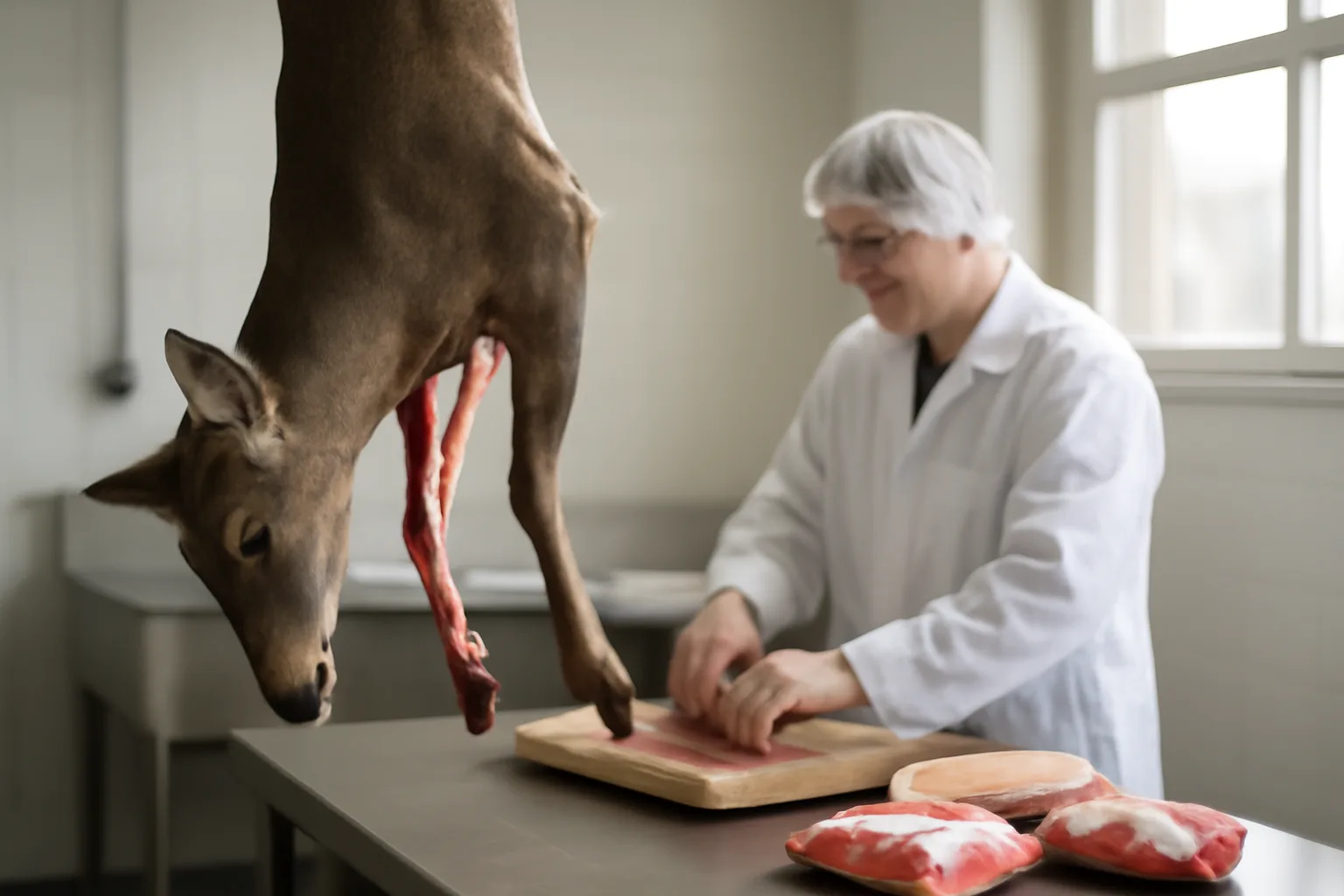
TL;DR
In Arkansas you need two permits to run a cut and wrap business: a Commercial Wildlife Possession Permit from the AGFC ($25/year) and a food processing plant permit from the Arkansas Department of Health. Hunters pay $85 to $150 per deer for basic processing, close to the $105 national average [1]. Turnaround runs 5 to 10 days early, 2 to 4 weeks at peak. Facility startup costs $20,000 to $50,000 [7].
Do you need a license for cut and wrap in Arkansas?
Yes, and you need two of them. The Arkansas Game and Fish Commission (AGFC) requires a Commercial Wildlife Possession Permit before you can legally take in a hunter's deer. That permit covers possession, storage, and disposition of deer someone else killed. You also need a food establishment permit from the Arkansas Department of Health (ADH), because cutting wild game for money counts as food manufacturing [3]. Skip either one and you're operating illegally. Fines run up to $1,000 per deer, and a repeat offense can cost you the whole business.
Here's where people get confused. You don't need either permit to cut and wrap your own deer at home for your own family. The law draws a hard line at money or barter. Take a neighbor's deer in exchange for half the meat, and you're now an unlicensed processor. Both agencies treat that as a real violation.
If you plan to open a shop, get the AGFC possession permit first. They want proof that you have a facility and an ADH application already moving. From there the health department handles the food safety side.
How much does cut and wrap cost in Arkansas?
Basic cut and wrap runs $85 to $150 per deer in Arkansas. That covers skinning, quartering, deboning, grinding the trim, and wrapping in freezer paper. The National Deer Association's 2023 Deer Report put the national average at $105 [1], and Arkansas shops land right around that number. Specialty work climbs fast. Sausage or jerky tacks on $1.50 to $3 per finished pound. Vacuum sealing runs $0.50 to $1 per pound over paper. Caping for taxidermy adds $75 to $125.
Starting a business is a different math problem, and the permit fees are the cheap part. The AGFC possession permit costs $25 per year [2]. The ADH food processing plant permit starts around $175 annually, with the exact figure tied to your facility's square footage and risk category [3].
The real money goes into the building. Most new operators sink $20,000 to $50,000 into a walk-in cooler, a commercial grinder, stainless tables, sinks, and packaging gear [7]. You also need a written food safety plan. Plenty of new processors buy an off-the-shelf HACCP kit to check that box. CutWrapPath's HACCP + Deer-Season Kit costs $179 one-time, and it includes the written plan templates and opening-week checklists that carry you through the first health inspection.
How long does cut and wrap take in Arkansas?
Plan on 5 to 10 business days during the early archery and muzzleloader seasons. Once rifle season opens in November, that window stretches. Two to three weeks is common, and some high-volume shops quote four. Three things run the clock: cooler space, staff levels, and how much custom work is in the queue. If a shop is grinding and stuffing 200 pounds of sausage a day, your simple cut-and-wrap order waits behind all that labor.
Call ahead and ask. A few processors print expected turnaround right on the pickup slip. If you want the meat frozen before pickup, add a day or two.
Don't rush a processor. A shop that promises a two-day turnaround during peak is either lying or cutting corners on sanitation. Good work takes the time it takes.
What permits do I need to start a deer processing business in Arkansas?
Two state permits form the floor.
First, the AGFC Commercial Wildlife Possession Permit. This is not a hunting license. It authorizes your business to receive, hold, and process deer that belong to other people. To apply, you submit a form with a description of your facility, a sketch of the layout, and a plan for handling, storing, and disposing of waste. The fee is $25 per year [2]. You'll also show that ADH approval is in the works.
Second, the ADH Food Processing Plant Permit, which runs through the Food Protection Program. ADH reviews your plans, inspects the finished facility, and checks your food safety procedures. The annual fee tracks risk level and square footage. For a small game processor, expect $175 to $300 a year, but confirm the current schedule directly with ADH [3].
You may also need a local business license and zoning clearance from your city or county. If you sell any retail products out of the shop, a separate retail food permit can apply.
How do I find a licensed deer processor in Arkansas?
The AGFC keeps a public list of approved deer processors, searchable by county [4]. It carries addresses and phone numbers, and it's the fastest way to find a legal shop near you. You can also ask at feed stores, hunting clubs, or on Arkansas hunting forums.
When you call, ask straight out: "Do you hold a current AGFC possession permit and an ADH food permit?" Any processor taking money in Arkansas must have both. If they dodge the question, move on. A permitted processor keeps your deer inside the legal possession chain, which protects you if a game warden checks your tags.
What do cut and wrap services include?
Standard cut and wrap means the processor skins the deer, quarters it, removes silver skin and sinew, cuts the major muscles into steaks and roasts, and grinds all the trim. The meat goes into freezer paper, labeled with your name and the species. That's the base package.
Almost everything else costs extra. Sausage (summer sausage, bratwurst, snack sticks) and jerky are the big upcharges. Some shops offer vacuum sealing as an upgrade. Caping for a shoulder mount or cleaning a skull for a European mount are separate jobs entirely.
Ask for a printed price sheet before you authorize any work. A clear price menu is a good sign. It means the shop isn't guessing at the end of the season when you show up to collect your meat.
Why do cut and wrap prices vary in Arkansas?
Location drives a big share of the spread. A processor near the deer lease country of the Delta or the Ozarks often runs on volume and prices lower. A small custom shop outside Little Rock may charge more because it handles fewer deer and puts more hands on each one. Wrapping method matters too. Vacuum-sealed packages add $0.50 to $1.00 per pound over paper. Shops that make all their own sausage carry higher ingredient and labor costs, and that shows up in the per-pound add-on.
Some processors charge a flat rate per deer no matter the size. Others price by hanging weight. Flat rate is simpler for you. Weight-based pricing can sting when you bring in a big-bodied buck. Always ask which method the shop uses before you commit.
Can I cut and wrap my own deer without a license in Arkansas?
Yes. Processing your own deer at home, for your own table, needs no commercial permit. The AGFC possession permit applies only when you take in deer for compensation. You still follow every tagging and transport rule, and you can't sell, barter, or even donate the processed meat unless you run a licensed facility. ADH does not inspect private home kitchens, so you're free to butcher your own deer without their oversight.
The moment you take money or a trade for processing someone else's deer, you're in commercial territory. Even doing it "at cost" for a friend counts as compensation to enforcement. Want to process for others? Get the permits.
What are the costs beyond the per-deer fee?
For hunters, the extras stack up once you go past basic cut and wrap. Sausage commonly runs $1.50 to $3 per pound of finished product [5]. Jerky sits in the same range. Caping for a shoulder mount costs $75 to $125 at many Arkansas shops. A European skull clean runs $50 to $100. Some processors add a small disposal fee for the carcass.
For the business owner, the costs past the per-deer ticket are basically everything. A walk-in cooler might run $8,000 to $15,000. A commercial grinder costs $2,000 to $5,000. Then come stainless tables, sinks, packaging materials, a scale, and a food safety plan. A HACCP plan isn't optional if you ever want to process under USDA inspection, and for state-inspected facilities ADH expects a written food safety system. CutWrapPath's HACCP + Deer-Season Kit costs $179 one-time and delivers the plan templates and season-start checklists new processors lean on to pass that first inspection.
How does Arkansas compare to neighboring states?
Arkansas prices sit in the middle of the Southeast range. Alabama's typical fee runs $85 to $130. See cut and wrap cost in Alabama for the full picture. Colorado pushes past $150 for the same basic work, because land and labor cost more out there. Our guide on cut and wrap cost in Colorado breaks down those numbers. Alaska's remote logistics drive costs above $200 per animal. Read cut and wrap cost in Alaska to see why.
For a wider view, we also cover cut and wrap cost in Arizona, cut and wrap cost in California, and cut and wrap cost in Florida. If you process for hunters who travel in from out of state, these comparisons help you price competitively. They also help a hunter decide whether to eat the cost at home or process closer to camp.
Frequently asked questions
Do you need a license for cut and wrap in Arkansas?
Yes. You need a Commercial Wildlife Possession Permit from the AGFC ($25/year) and a food processing plant permit from the Arkansas Department of Health. Both are required if you accept deer from hunters for compensation.
How much does cut and wrap cost in Arkansas?
Basic cut and wrap (skin, quarter, debone, grind trim, wrap in paper) runs $85 to $150 per deer. The national average is $105, per the 2023 National Deer Association Deer Report. Add-ons like sausage or vacuum sealing cost extra.
How long does cut and wrap take in Arkansas?
Early-season turnaround often runs 5 to 10 business days. During the November rifle peak, expect 2 to 4 weeks. Staffing, cooler space, and the volume of custom orders all affect the clock. Ask the processor at drop-off.
Can I process deer for friends at cost without a license?
No. Any compensation, including barter or cost-sharing, triggers the need for both the AGFC possession permit and the ADH food permit. Processing deer for others without a license can result in fines up to $1,000 per deer.
What is the penalty for processing deer without a license in Arkansas?
Fines can reach $1,000 per deer, and you risk confiscation of the meat and equipment. Repeat offenses can lead to permanent revocation of the ability to obtain permits, effectively ending the business.
Does Arkansas require a HACCP plan for deer processing?
The ADH expects a written food safety plan as part of a food processing plant permit, even if a full USDA HACCP plan isn't mandated for state-inspected facilities. Many new processors use a pre-written kit to satisfy the requirement.
How do I get an AGFC Commercial Wildlife Possession Permit?
Submit an application to the AGFC with a description of your facility, a layout sketch, and a waste-handling plan. The annual fee is $25. AGFC will verify you are pursuing ADH approval before issuing the permit.
What's included in a standard cut and wrap in Arkansas?
Skinning, quartering, removing sinew and silver skin, cutting major muscles into steaks and roasts, grinding all trim, and wrapping in freezer paper. The package is labeled with the hunter's name and species.
Can I vacuum seal my deer meat at a processor?
Yes, most processors offer vacuum sealing as an upgrade. Expect to pay $0.50 to $1.00 per pound more than paper wrap. Vacuum sealing extends freezer life and reduces freezer burn.
Do Arkansas deer processors accept out-of-state deer?
Yes, but the deer must comply with AGFC import rules. Pay attention to chronic wasting disease (CWD) transport restrictions; deer from CWD-positive zones may have limits on what can cross state lines. Ask the processor about current rules.
How much does deer sausage cost at an Arkansas processor?
Sausage typically adds $1.50 to $3.00 per pound of finished product. This covers summer sausage, snack sticks, bratwurst, and similar items. Pricing varies by recipe and ingredients.
Is there a limit on how many deer a hunter can have processed in Arkansas?
No state limit on the number of deer you can take to a processor, but each deer must have a valid tag assigned to the hunter. The processor is required to verify the tag before accepting the carcass.
What's the easiest way to start a cut and wrap business in Arkansas?
Begin with the AGFC application guide. Secure a building with adequate space for a cooler, cutting room, and waste disposal. File for the AGFC possession permit. Once that is in progress, contact ADH for plan review. Acquire a HACCP kit and equipment. Open only after both permits are in hand.
How much can a deer processing business make in Arkansas?
Net profit per deer typically runs $40 to $70 after direct costs, per the NDA Deer Report. At 200 deer per season, that's $8,000 to $14,000 in net before overhead like rent and insurance. Larger operations can scale that profit, but season length caps volume.
Sources
- National Deer Association, 2023 Deer Report: The average cost to process a deer in the United States is $105.
- Arkansas Game and Fish Commission: The annual fee for a Commercial Wildlife Possession Permit is $25.
- Arkansas Department of Health, Food Protection Program: A food processing plant permit is required for any facility that processes wild game for commercial purposes.
- Arkansas Game and Fish Commission, Approved Deer Processors: The AGFC maintains a public list of licensed deer processors organized by county.
- USDA Food Safety and Inspection Service, Game Processing Guidance: Sausage add-ons for wild game processing commonly fall between $1.50 and $3.00 per pound.
- University of Arkansas System Division of Agriculture Cooperative Extension: Standard cut-and-wrap orders are commonly completed in 7 to 10 business days during early season.
- University of Arkansas System Division of Agriculture, Wild Game Processing Business Feasibility (FSA9616): Start-up costs for a game processing facility range from $20,000 to $50,000.
- Arkansas Game and Fish Commission, Deer Tagging Requirements: Processors must verify a hunter's valid tag before accepting a deer carcass.